
Zeenat Mazhar runs a free 30-minute session to audit your Instagram strategy and map out exactly what to fix to grow reach in 2026 — with or without hashtags.
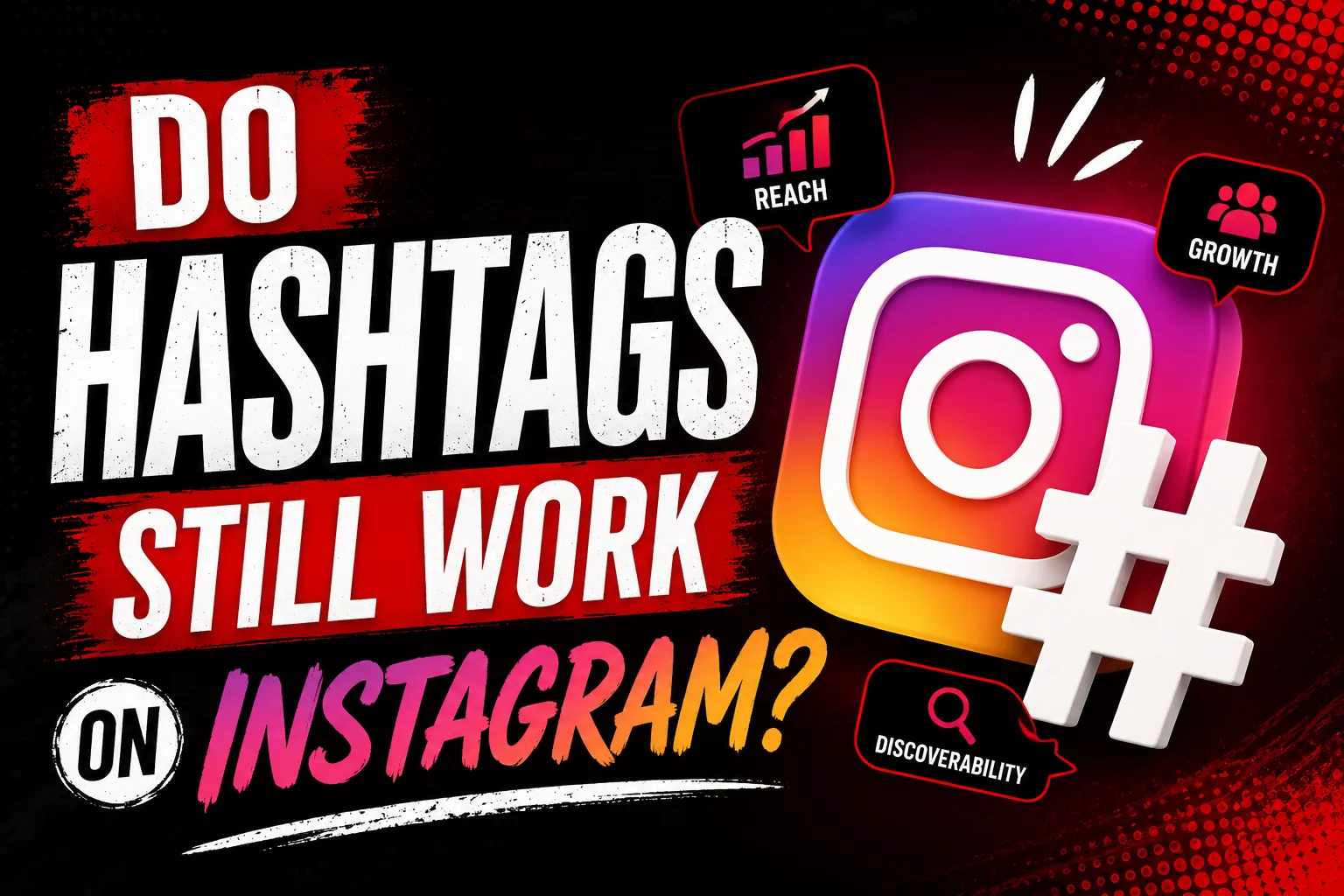
This is one of the most debated questions in social media marketing right now. Some "gurus" say hashtags are dead and a waste of caption space. Others insist you must stack 30 hashtags on every post or your reach will collapse. Both extremes are wrong. The honest answer based on what is actually working for accounts we manage in 2026 is more nuanced — hashtags still play a meaningful role, but Instagram has fundamentally changed how reach gets distributed, and the strategy that worked in 2022 produces noticeably worse results today. Here is what actually works now.
01 The Short Answer
Hashtags still work — but they are no longer the primary driver of reach. In 2026, content quality, engagement velocity (likes, comments, saves and shares in the first hour), and the algorithm's prediction of how relevant your content is to a user matter far more than the hashtags you use. Hashtags are now a useful supporting signal, not the main lever.
The accounts gaining the most reach in 2026 use 3-8 highly relevant hashtags per post combined with strong opening hooks, compelling visuals, and content optimized for saves and shares. The accounts stuffing 30 hashtags into every caption are often hurting their performance because Instagram's algorithm interprets excessive hashtag use as a low-quality signal.
02 What Actually Changed With Instagram's Algorithm
Instagram made three major algorithm shifts between 2023 and 2026 that fundamentally changed how reach works.
Shift 1: Reels became the dominant distribution surface. Most non-follower reach now comes through the Reels feed and the Explore page, not the standard hashtag feed. Hashtags help posts appear in hashtag-specific feeds, but those feeds get a tiny fraction of overall Instagram usage compared to Reels.
Shift 2: AI-driven content matching replaced hashtag-driven discovery. Instagram's algorithm now analyses video content, captions, audio, on-screen text, and historical performance to decide who sees your post. The signal of "this person searched #fitness" is much weaker than "Instagram's AI thinks this person will engage with this fitness reel based on their behaviour history."
Shift 3: Keywords in captions became more important than hashtags. Instagram's search now indexes caption text the way Google indexes web pages. A caption with relevant keywords often outperforms hashtags for actual discovery.
2022: hashtags drove discovery — 2026: keywords in captions and content matching drive discovery, hashtags supplement it.
03 Hashtag Reach in 2026 vs 2022
The honest data: posts that previously got 30-40% of their reach from hashtag impressions in 2022 now get 5-15% of reach from the same hashtag stacks in 2026. The rest comes from Explore page placement, Reels feed distribution, account recommendations and direct follower engagement.
This does not mean hashtags are useless — that 5-15% can still translate to thousands of impressions on a well-performing post. It does mean that hashtag strategy alone cannot save mediocre content, and excessive hashtag stuffing now signals "spam" to Instagram's classifier algorithms.
04 When Hashtags Still Help in 2026
Hashtags still work in three specific scenarios.
- Niche communities with smaller, highly engaged hashtag followers (under 100K posts on the hashtag). Examples: #tinyhouseliving, #urbanfoodgarden, #vintagetypewriters. These communities still browse the hashtag feed actively.
- Branded hashtags you create and own. #YourBrand or #YourCampaign is a useful discovery tool for people already in your ecosystem.
- Location-based hashtags for local businesses. #LondonBakery, #AustinTexasRestaurants. Locals do browse these.
Hashtags do NOT help much for: generic high-volume hashtags (#love, #beautiful, #photography), most lifestyle categories where Reels-driven discovery has overtaken hashtag browsing, or any niche where the algorithm already understands the content theme.
05 When Hashtags Actually Hurt Your Reach
This part is uncomfortable for people clinging to 2022 playbooks. Excessive hashtag use can actively suppress your reach in 2026 for these reasons:
- Spam classifier triggers. Instagram's spam detection flags posts with 25-30 hashtags as likely promotional spam, especially if those hashtags are unrelated to the content.
- Caption length penalty. Long hashtag walls reduce how much actual caption content the algorithm can analyse for keyword relevance.
- Visual cluttering. Users see hashtag walls and scroll past faster, reducing dwell time — a key engagement signal.
- Mismatched hashtags trigger penalties. Using popular but unrelated hashtags (e.g., #love on a B2B post) can flag your post as deceptive and reduce reach.
06 The Right Number of Hashtags in 2026
The data from accounts we manage and the broader industry research points to the same answer: 3-8 highly relevant hashtags per post is the sweet spot in 2026.
This range is small enough to feel deliberate and curated, large enough to capture the hashtag-based discovery signal that still exists, and small enough not to trigger spam classifiers. The exact number within this range depends on niche — smaller-community niches benefit from the higher end (6-8), broad consumer categories perform better at the lower end (3-5).
07 Hashtag Categories: What to Mix
A balanced hashtag set in 2026 typically includes three categories:
- 1-2 branded hashtags — your own brand name and campaign tags.
- 2-3 niche-specific hashtags — communities your target audience actually browses (under 500K posts).
- 1-2 broader category hashtags — mid-volume (500K-5M posts) for additional discovery.
Avoid: massive-volume hashtags (10M+ posts) where your content gets buried in seconds, hashtags unrelated to your actual content, banned or shadow-banned hashtags (Instagram quietly suppresses these — check before using).
08 Keywords Beat Hashtags Now
The single biggest shift most accounts miss: Instagram's search now indexes your caption text and on-screen text in Reels, the same way Google indexes web pages. This means natural keyword usage in your caption drives more discovery than hashtags in many categories.
Example: a Reel about "easy meal prep ideas for busy professionals" with those exact words in the caption and on-screen text will be surfaced to users searching "meal prep" or "easy dinners" regardless of which hashtags you use. The algorithm understands the content theme directly.
Practical implication: optimize your captions like landing page copy. Include the keywords your audience would search. Mention specific topics, problems, solutions and benefits in natural sentences. This is far higher-leverage than hashtag stacking.
09 What Drives Reach More Than Hashtags in 2026
The factors that actually move reach right now, ranked roughly by impact:
- Content format — Reels get exponentially more distribution than static posts.
- Opening 3 seconds — if you do not stop the scroll in the first frame, the algorithm penalises the post.
- Watch time / dwell time — the longer users engage with your post, the more reach the algorithm grants.
- Saves and shares — these signal "valuable enough to revisit or recommend" and weigh heavily.
- Comments with substance — meaningful conversations boost reach more than emoji-only comments.
- Caption keywords — well-optimized captions enable Instagram search discovery.
- Posting cadence consistency — the algorithm rewards accounts that post predictably.
- Hashtags — supplementary signal, useful but not dominant.
Notice hashtags are at the bottom. That is the honest reality in 2026. The brands consistently growing on Instagram focus on the first six factors — hashtags are an afterthought that takes 30 seconds to add at the end.
10 The 2026 Instagram Reach Strategy
Here is the concrete strategy we use for clients in 2026.
- Lead with Reels. 70-80% of content should be short-form vertical video. Reels get 3-10x the reach of static posts on average.
- Optimize the first frame. Strong visual hook, on-screen text question, or curiosity gap. The first second decides the rest.
- Write captions like SEO copy. Include keywords your audience searches. Lead with a hook. Use line breaks. End with a save/comment prompt.
- Use 3-8 relevant hashtags. Mix branded, niche, and category. Place them at the end of the caption, not in a comment.
- Post consistently. 3-5 times per week minimum on Reels. Stories daily for engagement signals.
- Engage in the first hour. Reply to every early comment. Heart every early like. Engagement velocity matters enormously.
- Track which content gets saved and shared. Saves and shares are your highest-quality success signal. Make more of what gets saved.
11 Common Hashtag Mistakes in 2026
- Using the same hashtag set on every post. The algorithm flags this as low-effort and reduces reach.
- Stacking 30 generic hashtags. Triggers spam classifiers. Use 3-8 relevant ones instead.
- Putting hashtags in the first comment. No measurable benefit over caption placement. Just use the caption.
- Targeting mega-volume hashtags. Your post is invisible in #love within seconds. Pick smaller, more relevant tags.
- Using shadow-banned hashtags. Some hashtags are quietly suppressed by Instagram. Search the hashtag — if no recent top posts appear, avoid it.
- Ignoring captions. Spending an hour on the visual and 30 seconds on the caption is the wrong ratio for 2026.
12 The Real Question to Ask
If you are spending real time researching hashtags every week, you are optimizing the wrong variable. The brands growing fastest on Instagram in 2026 spend their time on hook optimization, caption keyword research, content theme development, and engagement velocity — not hashtag research.
The right approach: pick a solid 3-8 hashtag set for your niche, save it as a template, refresh it quarterly, and spend the time you saved on content quality. That is where the leverage actually lives now.
⌖ The Bottom Line
Hashtags still work on Instagram in 2026 — but they are supporting actors, not the lead role. Use 3-8 relevant hashtags per post, mix branded with niche with category, and stop wasting time on hashtag research that produced diminishing returns three years ago. The real reach drivers in 2026 are content format (Reels), opening hook quality, caption keywords, engagement velocity, and posting consistency. Get those right and hashtags become a 30-second add-on at the end of post production.
The accounts complaining about declining Instagram reach are usually the ones that doubled down on 2022 tactics when the algorithm moved on. The accounts growing are the ones that adapted to what works now — even when it meant abandoning advice they were given two years ago.
Ready to grow your Instagram in 2026?
Skill Zone audits your Instagram strategy — content mix, captions, hashtags, posting cadence, engagement patterns. Free 30-minute session and walk away with a clear action plan to grow reach and conversions.